

Korea keeps one of the best paper trails on used cars in the world. That is the real reason you can buy here safely. The catch is that "checking the history" is not one thing. There are several separate records, each one catches a different lie, and the most useful of them misses a big one that nobody tells you about.
We pull these records every week, so here is the whole picture: what each one is, what it catches, how to read it, and where it stops.
The records that matter
Three records do most of the work on a normal dealer car.
- The insurance history (KIDI CarHistory). Korea's insurers report their claim payouts into one system run by the Korea Insurance Development Institute. Pull the report on a car and you see the accidents that were claimed, with dates, plus flags for a total loss, theft, or flood, the mileage logged at different points over the years, how many owners it has had, and whether it was ever a rental or commercial vehicle. It costs about the price of a coffee, and the flood-damage check is free. This is the single most important record.
- The condition report (성능·상태점검기록부). When a licensed dealer sells a used car in Korea, they must provide a physical condition report: dozens of checkpoints covering the odometer, the engine and major systems, flood signs, and, most importantly, the frame, where each structural panel is marked as sound, replaced, welded or deformed. It is a snapshot of the car on the day it was checked. Useful, but treat it as the seller's claim, not gospel, because it is only as honest as the inspector who filled it in.
- The registration and inspection record. The government registry shows the ownership chain and, crucially, whether there is a loan or lien on the car (you do not want to buy a car that is still collateral). It also holds the mileage recorded at each mandatory safety inspection, which gives you an independent mileage trail to check the odometer against.
If a car came through a Korean auction rather than a dealer, it also carries an auction grade and a panel map. But most of what we source comes from dealers, where the condition report does that job.
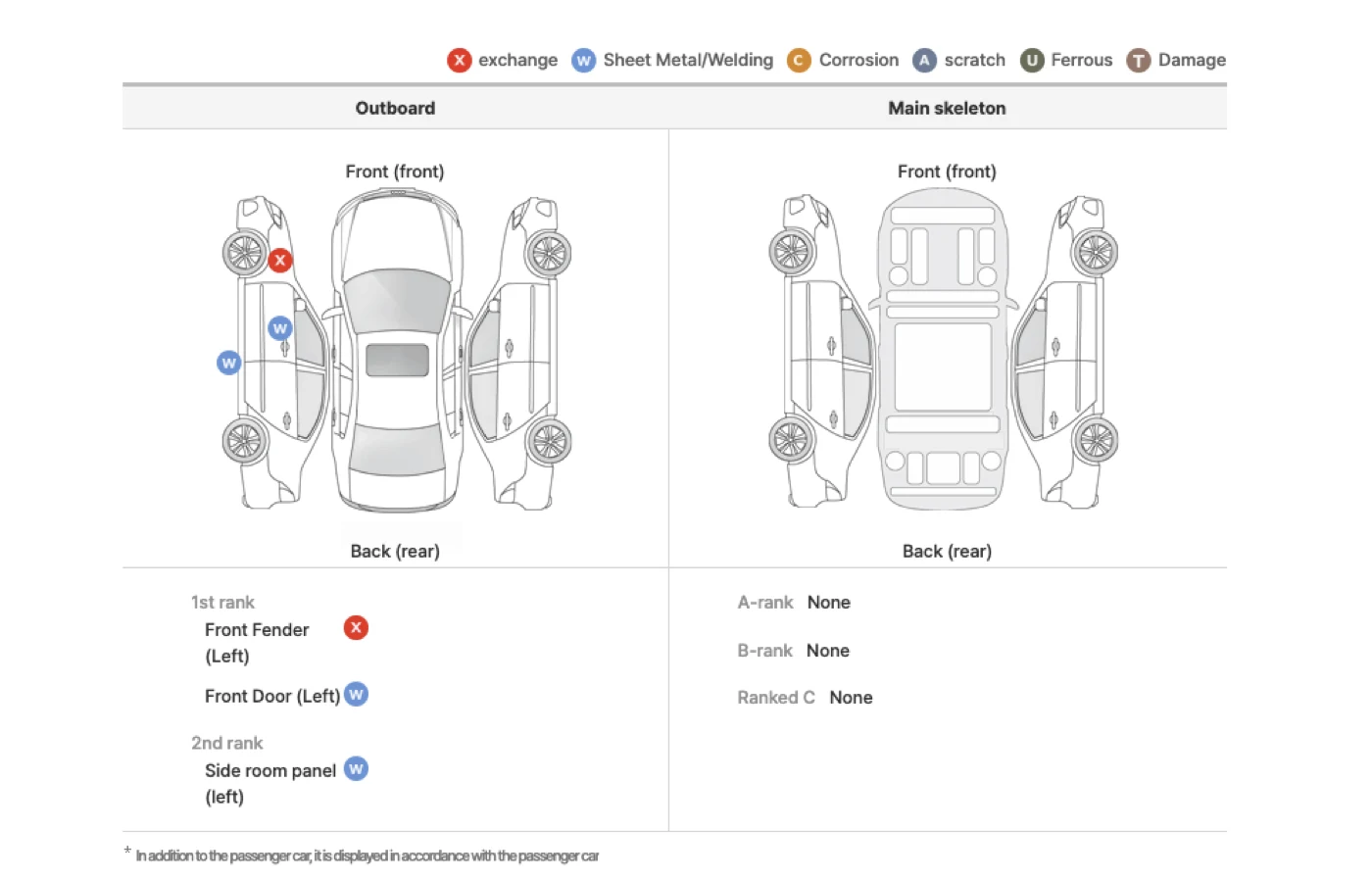
Which record catches which problem
| What you are worried about | The record that catches it |
|---|---|
| Odometer rollback | The mileage trail from inspections, against the odometer today |
| A hidden accident | The insurance history, cross-checked against the condition report |
| Flood damage | The insurance flood flag (free), plus the physical seatbelt test |
| A loan or lien on the car | The registration ledger |
| Cosmetic damage vs real structural repair | The frame codes on the condition report |
| Rental or commercial hard life | The insurance history and the registry |
The real trick: cross-check them
No single record is proof on its own. The power is in reading them against each other. A seller says the car is accident-free, and the condition report agrees, but the insurance history shows a claim paid out in 2023. That gap is the lie. The odometer reads 60,000 km, but the last mandatory inspection two years ago already logged 90,000. That gap is a rollback. This reconciliation, one record checking another, is what actually protects you, and it is the part almost nobody does.
Reading the red flags
- Mileage that goes backward or barely moves between two dated records. Classic rollback.
- A total-loss, flood or theft flag in the insurance history. Near-disqualifying, flood especially, it wrecks the electrics for years.
- A string of short-term owners. A car that keeps changing hands quickly is usually telling you something.
- Frame panels marked replaced, welded or deformed. A bolt-on outer panel is cosmetic. A repaired structural panel is a repaired crash.
- Rental or commercial history. The wear is heavier than the mileage suggests.
- Physical tells the paper can miss: pull the seatbelts all the way out and look for waterlines or mould (flood), and check pedal, seat and wheel wear against the claimed mileage.
What the records do not catch
Here is the honest part the report-sellers leave out. The insurance history only knows about accidents that went through insurance. In Korea it is very common to pay a body shop in cash to keep an insurance premium down, and a cash-settled repair never appears in any record. So a car can be genuinely "accident-free on paper" and still have been rebuilt. Add that the condition report is a snapshot that is sometimes optimistic, and the picture is clear: the records get you most of the way to the truth, maybe eighty or ninety percent of it. The last stretch, the cash repairs and the car's real condition today, only closes with a hands-on inspection. That is why we never rely on paper alone, and neither should you.
Getting them, and why it takes someone inside Korea
Some of this you can glimpse from abroad, and some cars show more than others. But the full records are in Korean, tied to the car's Korean number, and most of them sit behind a paywall or a Korean login that wants a Korean identity to get in. Piecing the real picture together from outside the country is slow and partial at best. That is the honest reason a foreign buyer works through someone on the ground: not for a secret, but for access.
We are a Korean company, so we pull these records directly, at the source, on every car we look at, and read and reconcile them for you against a real inspection. That is not a repackaged report bought from a reseller, it is the actual record, in our hands, per car. Want to see what that looks like? Ask us for a sample. Read how our process works, see how to avoid the scams, or just tell us the car you want and we will pull its history and inspect it before you pay a cent.